
Last updated November 10, 2026 by Matthew Kleinfelder, PRK Insurance Agency, Melville, NY.
Boat insurance covers your boat, its motor and trailer, and your liability if someone is hurt or something is damaged on the water. New York does not require it by law, but marinas often ask for proof of liability coverage and a lender will usually require the boat itself to be insured. This guide explains what a boat policy covers, what it leaves out, how winter lay up and storm season affect it on Long Island, and what to ask before you buy.
Key takeaways
- New York law does not require boat insurance. Marinas and lenders often do.
- A boat policy has two main parts: damage to the boat itself and your liability to other people.
- A homeowners policy covers small boats only in a limited way. Most powerboats need their own policy.
- Agreed value and actual cash value pay very differently after a total loss. Know which one you have.
- Most Long Island policies have a winter lay up period and a navigation area. Using the boat outside either can leave you without coverage.
- Ask how the policy handles a named storm before hurricane season, not during it.
Is boat insurance required in New York?
No. Boat insurance is not required by New York law. In practice, most owners need it anyway:
- Marinas, yacht clubs and winter storage yards often ask for proof of liability coverage before they give you a slip or a spot.
- If the boat is financed, the lender will usually require coverage for damage to the boat itself.
One thing New York does require is a boating safety certificate. Since January 1, 2025, everyone who operates a motorized boat in New York needs one, whatever their age. Some carriers give a discount for a completed safety course, so tell us if you have yours.
What does boat insurance cover?
A boat policy is built from the parts below. Our boat insurance page has the short version.
The boat, motor and trailer
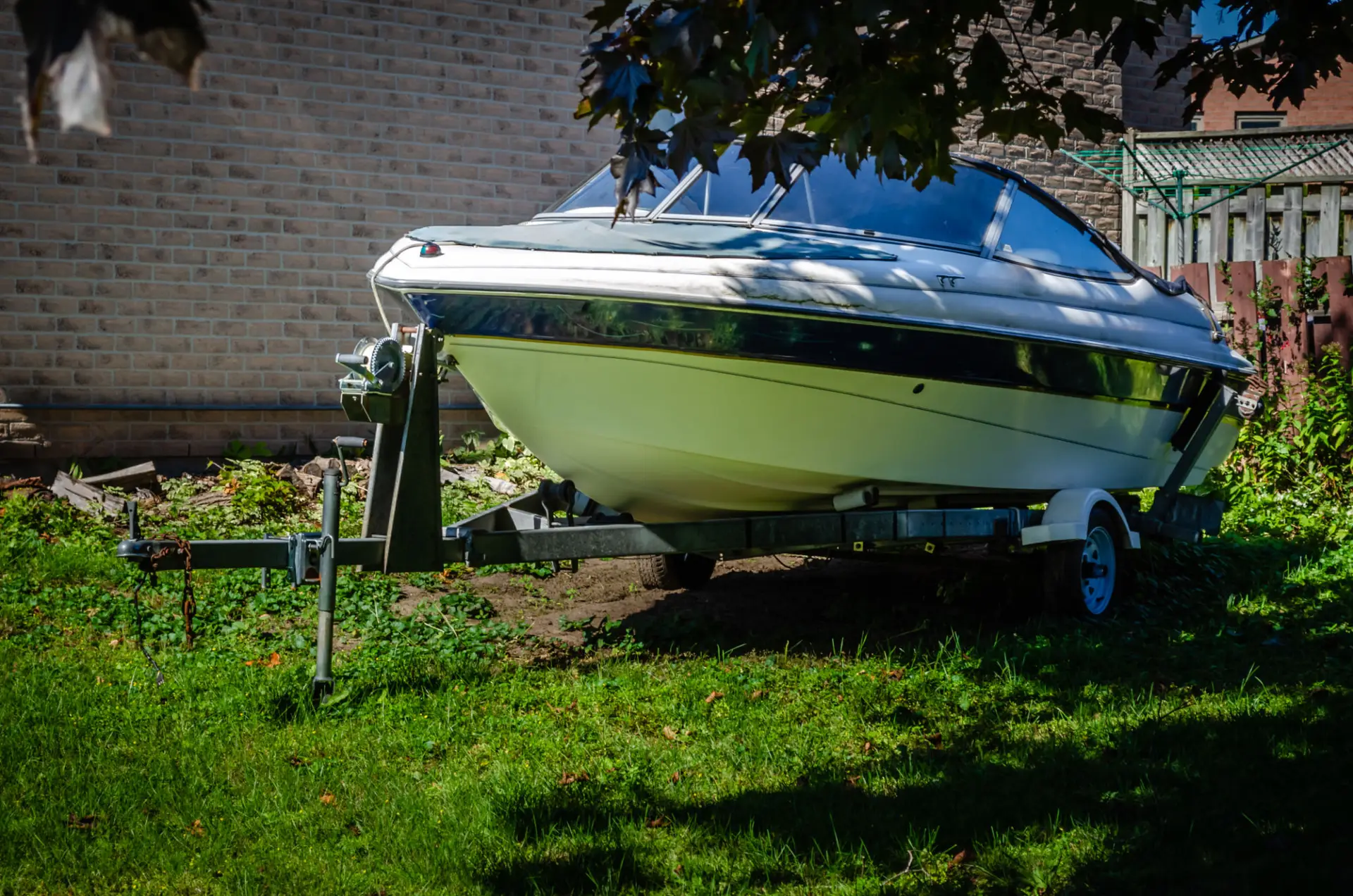
Physical damage coverage pays to repair or replace the boat, its motor, installed equipment and usually the trailer after a covered loss such as a collision, fire, theft, vandalism or a storm.
Liability
Pays for injuries to other people and damage to other boats, docks and property when you are responsible, along with your legal defense.
Medical payments
Pays medical bills for you and your passengers after an accident on the boat, whoever was at fault.
Uninsured boater
Covers your injuries when the other boater has no insurance or not enough.
Towing, wreck removal and fuel spills
On water towing, the cost of raising and removing a sunken boat, and the cleanup after a fuel spill. These bills can be larger than the boat is worth, and many owners overlook them.
Fishing gear and personal items
Rods, tackle, electronics and other belongings you carry on board, up to a limit.
Agreed value or actual cash value?
This is the most important choice in a boat policy. With agreed value, you and the carrier settle on what the boat is worth when the policy starts, and that is what a total loss pays. With actual cash value, a total loss pays what the boat was worth at the time of the loss, after depreciation. Agreed value costs more and is the usual choice for newer and higher value boats. Actual cash value can suit an older boat.
Does homeowners insurance cover a boat?
Only in a small way. A typical homeowners policy limits coverage for a boat, its motor and trailer to a low figure, often about $1,500, and covers liability only for small, low powered craft. A powerboat, a sailboat or a jet ski usually needs its own policy. Check the watercraft wording in your own homeowners policy, or ask us to read it with you.
What does boat insurance not cover?
- Wear and tear, gradual deterioration, corrosion and marine growth.
- Damage from poor maintenance, such as a hose or fitting left to fail.
- Use outside the navigation area or the lay up dates in your policy.
- Charters, rentals and other paid use, unless the policy is written for it.
- Racing, on many policies.
How do lay up periods and navigation limits work?
Most Long Island boats come out of the water for the winter, and most policies reflect that with a lay up period, the months when the boat is stored and not used. The premium is lower because of it. The boat is still covered for losses such as fire or theft in storage, but not for use on the water during those dates.
The policy also names a navigation area, the waters where you are covered. If you plan to take the boat south for the winter, or offshore beyond the stated limit, tell us first so the policy can be changed.
What about hurricanes and named storms?
Storm season is the real test of a Long Island boat policy. Ask three things before it starts:
- Is there a separate named storm deductible, and how much is it?
- Does the policy help pay to haul the boat out when a storm is forecast?
- Does my marina require a storm plan, and does my policy match it?
A boat kept behind a house on the water raises the same questions for the house. See our page on coastal homeowners insurance and the Long Island flood guide.
What affects the cost of boat insurance on Long Island?
- The boat. Value, length, age, type and horsepower.
- Where it is kept. A slip, a mooring, a lift or a trailer in the driveway are priced differently.
- How it is used. Fishing, cruising, water sports and how far you go.
- The operator. Years of experience, a completed safety course and prior claims.
- Coverage choices. Agreed value or actual cash value, the liability limit and the deductibles.
What should I ask before buying boat insurance?
- Is the boat insured for agreed value or actual cash value?
- What are the lay up dates and the navigation area?
- Is there a named storm deductible, and is hauling out covered?
- Are wreck removal and fuel spill cleanup included, and to what limit?
- Is the trailer covered, on the road and in storage?
- Does my marina or lender need to be listed on the policy?
Common questions
Do I need insurance for a jet ski?
A jet ski is insured the same way as a boat, with its own policy. Homeowners policies rarely cover one.
Is my boat covered in winter storage?
Yes, for covered losses such as fire, theft, vandalism and storm damage. Damage from freezing is often excluded unless the boat was winterized properly, so keep the paperwork from the yard.
Is my trailer covered?
Usually, as part of the boat policy, for damage to the trailer itself. Liability while towing comes from the auto policy of the vehicle doing the towing.
Get a Long Island boat insurance quote
PRK Insurance Agency in Melville compares boat insurance options for owners across Nassau and Suffolk County. Tell us about the boat, where you keep it and how you use it, and we will show you the coverage behind each price. Call 516 799 9001, visit us at 425 Broadhollow Road, Suite 415, Melville, NY 11747, or send the form below and a member of our team will follow up.